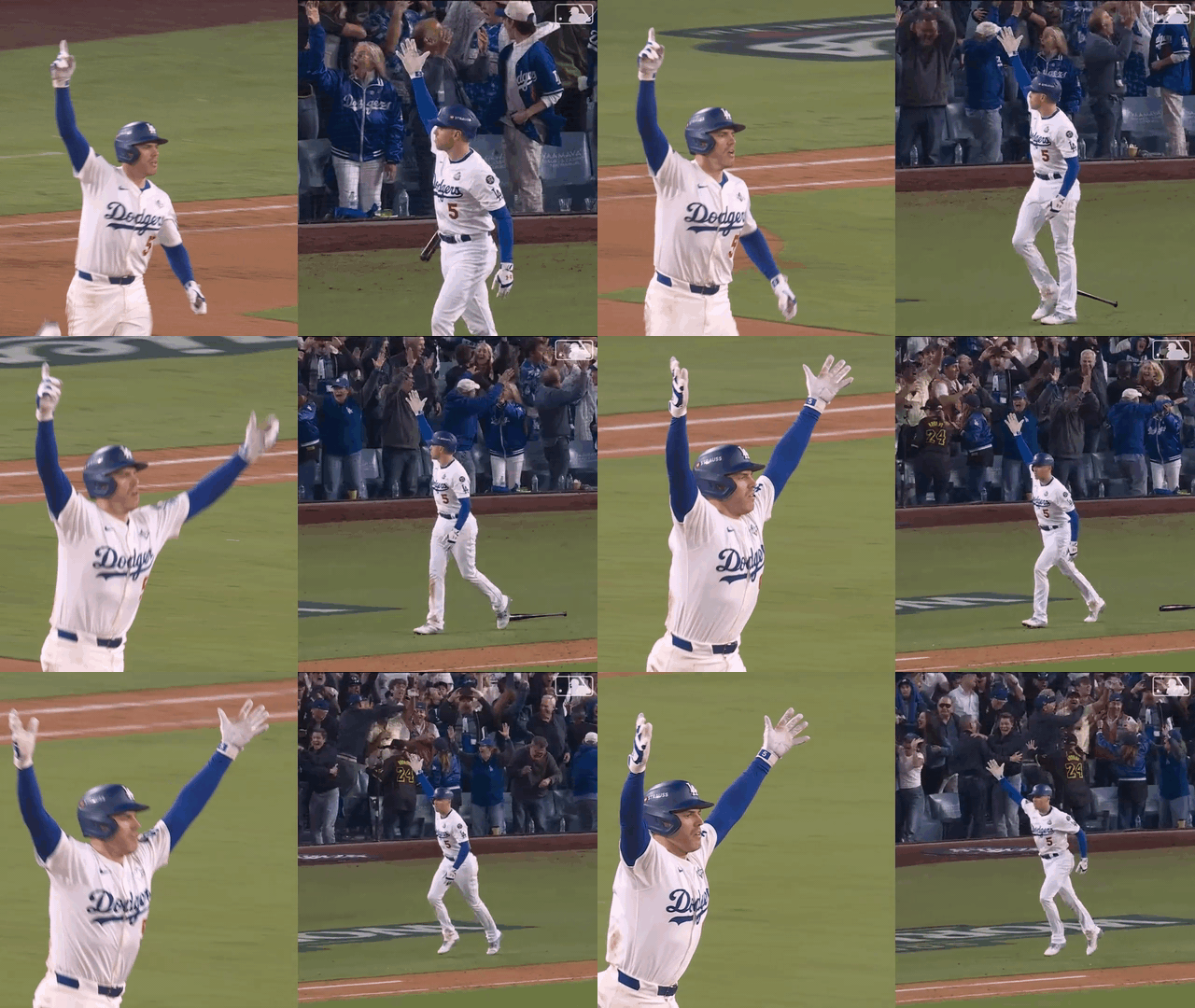
Freddie Freeman celebrates his World Series walk-off homers from last night (left) and 2024. |
Welcome to The Pregame Lineup, postseason edition! We'll keep you up to speed on everything you need to know every weekday throughout the 2025 World Series. Thanks for being here. With Game 4 of the World Series just hours away, the Dodgers and Blue Jays can ill afford to dwell on what happened in an absolutely epic Game 3. But we sure can.
It was a night of tension, twists and unforgettable October theater that stretched across 18 innings and nearly seven hours before Freddie Freeman's walk-off homer sailed over the center-field fence, ending the marathon and giving the Dodgers a 2-1 series lead. The game's effects could linger, too, as both teams carry the toll of one of the longest, wildest nights in World Series history into Game 4. • WS Game 4, presented by Capital One: Tonight, 8 ET/5 PT, FOX
Before we turn the page, let's revisit the chaos by looking at six insane numbers that capture the full magnitude of a classic Game 3. 18: Innings, tied for the longest game in World Series (and postseason) history. The only other time a Fall Classic Game went 18 innings? Seven years ago -- also Game 3, also at Dodger Stadium, also ending on a walk-off homer by a left-handed Dodgers hitter (Max Muncy). Talk about déjà vu.
9: Times on base for the incomparable Shohei Ohtani, three more than the previous playoff record. After Ohtani's game-tying homer in the seventh inning, which made him 4-for-4 on the night with two dingers and two doubles, the Blue Jays simply decided to stop pitching to him. Ohtani has another busy night ahead -- he's the Dodgers' starting pitcher for Game 4.
19: Pitchers used between the two teams, the most in a postseason game. Those pitchers threw a combined 609 pitches, 48 more than in any other postseason game since at least 2000. Seventy-two of those pitches came from Will Klein, the Dodgers' winning pitcher and the latest in a long line of unlikely World Series heroes. Klein was not on the Dodgers' roster for any of the first three playoff rounds and had never thrown more than 56 pitches in a professional outing.
6: Outs on the bases, including multiple plays at the plate. Risky baserunning put both defenses to the test throughout this game, and they repeatedly delivered in high-pressure situations.
37: Combined runners left on base, six more than any other game in postseason history. From the time the Dodgers tied the game in the bottom of the seventh, the two clubs went 10 consecutive innings without scoring, as each pitching staff kept finding ways to escape trouble.
2: World Series walk-off homers for Freeman. He's the only player in history with multiple Fall Classic walk-off home runs, and he did it in back-to-back years. -- Thomas Harrigan |
PITCH TO OHTANI IF YOU DARE |
Twelve days ago, we dug into what seemed like a quietly interesting aspect of this postseason: what felt like a rise in intentional walks. Well, the trend is still interesting -- and it's a lot less quiet now, after what happened to Shohei Ohtani in World Series Game 3. Ohtani's four intentional passes, plus one apiece for Mookie Betts and Andrés Giménez, brings us to 34, tied for the fifth most in any postseason, and just six shy of the all-time record of 40, set back in 2003.
While that's obviously due in large part to the expanded postseason, it's also true that just the first three games of this series have yielded more IBBs than nearly 90% of all previous Fall Classics. That's largely about Ohtani, who is tied for the second most in any postseason, behind only 2002 Barry Bonds, aka "arguably the most dangerous hitter of all time, at his peak." And with at least two games left in this series, Toronto manager John Schneider has made it clear this strategy will continue.
Now, is that a good idea? There's a reason that the strategy has generally fallen out of favor in recent years: The numbers don't support it. On the other hand, when a hitter ascends to a certain level -- like, say, Bonds or Ohtani -- you can understand where Schneider is coming from, and it's hard to argue that it didn't work in his favor in Game 3. Of the five times Toronto walked Ohtani in Game 3 (four intentionally), exactly zero turned into a run.
That shouldn't happen ahead of a pair of future Hall of Famers in Mookie Betts and Freddie Freeman. But Betts has struggled badly for weeks -- .170/.278/.234 since the start of the NLDS -- and Freeman was unable to do anything the three times he came up with an intentionally walked Ohtani on base. Until that trend changes, the walks will continue.
Will they even continue when Ohtani leads off the bottom of the first tonight? You'd think not, because it's an absurd proposition. Then again, everything about Ohtani's career to date is making the absurd seem normal. The Game 4 starting pitcher, after all, reached base nine times last night. -- Mike Petriello |
What could the Dodgers and Blue Jays possibly do for an encore after yesterday's 18-inning instant classic?
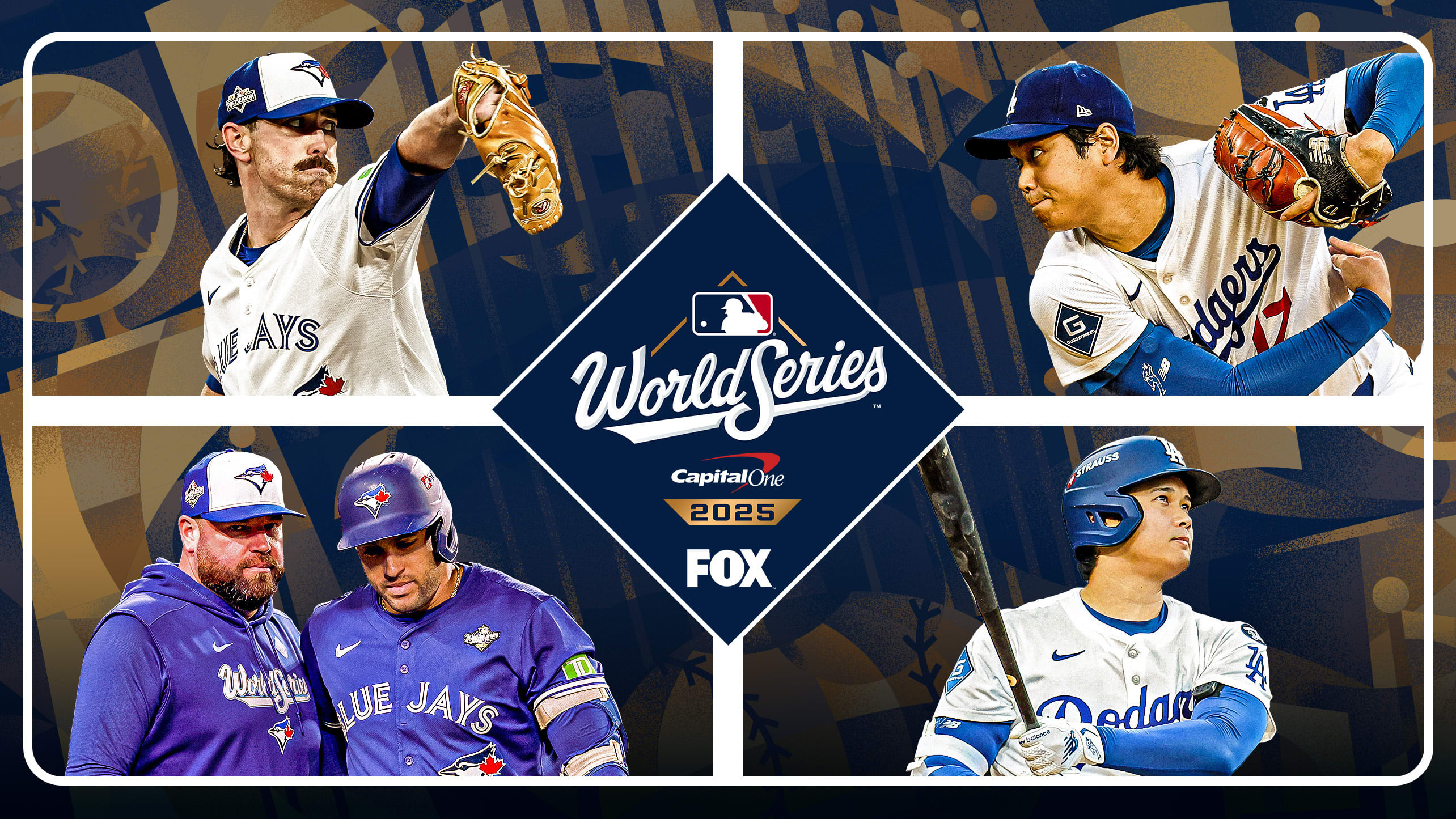
We'll find out in a few hours. Here are three key storylines for World Series Game 4.
1) How will Shohei Ohtani bounce back for a two-way game?
Ohtani just put on one of the greatest World Series performances of all time, crushing two home runs and reaching base an MLB postseason-record nine times in Game 3.
Seventeen hours later, he'll have to be ready to hit and pitch. What will his stamina be on the mound … and if he does get anything to hit, how will he fare?
2) What will the Jays do after George Springer's injury?
Springer had to leave Game 3 due to right side discomfort after a swing, and he was sent for an MRI. If Springer -- the Jays' leadoff hitter, who has four home runs this postseason -- has to miss Game 4 or beyond, that would have a huge impact on Toronto's offense.
As for who would take over as Toronto's DH, that spot could go to Bo Bichette, who's already been limited in the field and is playing out of position at second base due to his own left knee injury. In the worst case, if Springer has to miss the rest of the World Series, the Blue Jays could replace him on the roster with an extra pitcher, which would help after they used their entire bullpen last night.
3) How will these two teams cover innings in Game 4?
Both teams emptied their bullpens in Game 3. The Dodgers used all nine of their relievers, and the Jays used all eight of theirs.
So there will be a lot of pressure on Game 4 starters Ohtani and Shane Bieber to go deep into the game -- but two of Bieber's three postseason starts have lasted less than four innings, and Ohtani just played 18 innings.
When the bullpens come into play, it will be a scramble for both sides, especially after both team's closers, Jeff Hoffman and Roki Sasaki, pitched multiple innings yesterday. -- David Adler |
ONE'S LEAVING THE SHOW. ONE JUST GOT HERE |
Clayton Kershaw, who famously wears No. 22, was making what could be the final outing of his 18-year Dodgers tenure. Will Klein had appeared in a grand total of 22 career regular-season games.
Their Major League arcs could not be more different. But for one night, they were linked by a neutralizing force: extra-inning reliever.
When Kershaw entered in the 12th last night (remember, there were six more innings after this!), it was with the bases loaded, two outs and the lefty-hitting Nathan Lukes up. For all the lefties he's flummoxed over the years, this was a rare moment of unfamiliar territory for Kershaw, as it marked his first time entering an MLB game in extra innings or with the bases loaded. Just when you thought he had checked every box!
Kershaw got his man via a groundout, and the marathon contest forged on. After Edgardo Henriquez tossed two brilliant innings of his own, it was Klein's turn in the spotlight.
Everything about his appearance was noteworthy. Klein wasn't on the postseason roster until the World Series, in which he had already tossed a clean frame in Game 1. He hadn't thrown more than 72 pitches in an outing since college. He was traded twice this year, the second time after he was DFA'd on May 31. None of that mattered as he shut down Toronto with four sensational scoreless innings, setting up Freddie Freeman's eventual walk-off. Klein's night got even more magical from there, capped by a congratulatory handshake with Sandy Koufax.
Kershaw is set to retire after this season, and who knows what Klein's career will bring. But on one glorious October night at Dodger Stadium, they were bound by history, and will be forever.
The best summary of Klein's heroics? It came from Kershaw himself:
"What he did tonight -- above and beyond what anybody can expect of somebody that's literally never done that before." -- Elizabeth Muratore |
|
|
© 2025 MLB Advanced Media, L.P. MLB trademarks and copyrights are used with permission of Major League Baseball. Visit MLB.com. Any other marks used herein are trademarks of their respective owners.
Please review our Privacy Policy.
You (gahleexholly.hdhask@blogger.com) received this message because you registered to receive commercial email messages from MLB.com.
Please add info@marketing.mlbemail.com to your address book to ensure our messages reach your inbox. If you no longer wish to receive commercial email messages from MLB.com, please unsubscribe or log in and manage your email subscriptions.
Postal Address: MLB.com, c/o MLB Advanced Media, L.P., 1271 Avenue of the Americas, New York, NY 10020. |
|
|
|




No comments:
Post a Comment